Roof Inspection in Charlotte, NC
Charlotte Roof Master examines every square foot of your roof—shingles, flashing, vents, and all—with a detailed written report that documents exactly what you have and what needs attention. Whether you're buying, planning repairs, or maintaining your home, we deliver the facts. Call 7044761263 to schedule.
Call 7044761263What Is a Roof Inspection?
A roof inspection is a thorough visual assessment of your roof's condition, materials, and structural integrity. We examine every component—from shingles and underlayment to flashing and ventilation—to document what's working and what needs attention. You receive a detailed written report with photographic evidence of any damage or concerns. Most homeowner inspections take 1–2 hours and cost $300–$600.
Roof problems rarely announce themselves. A leak in your underlayment, a gap in step flashing, or failed sealant around pipe boots can silently wick water into your roof deck and attic for months before water stains appear on your ceiling. We catch these issues early—before they become expensive.
Why You Need an Inspection
Pre-purchase buyers use inspections to understand what they're buying. Homeowners schedule them after storms to document hail damage, wind uplift, or granule loss for insurance claims. Maintenance-minded property owners get annual inspections to extend roof life and avoid surprise leaks.
Warning Signs You Need an Inspection
- Missing, cracked, or curled shingles expose underlayment and allow water intrusion
- Water stains on ceilings or walls indicate active roof leaks in the roof deck or attic
- Granules accumulating in gutters signal shingle deterioration and end-of-life wear
- Sagging roofline suggests structural failure in trusses, rafters, or joists
- Daylight visible through attic roof boards means decking (plywood or OSB) has failed
- Moss, algae, or mold on roof surface indicates moisture and poor ventilation
- Ice dams at eaves during winter freeze-thaw cycles signal inadequate attic insulation
Our Step-by-Step Inspection Process
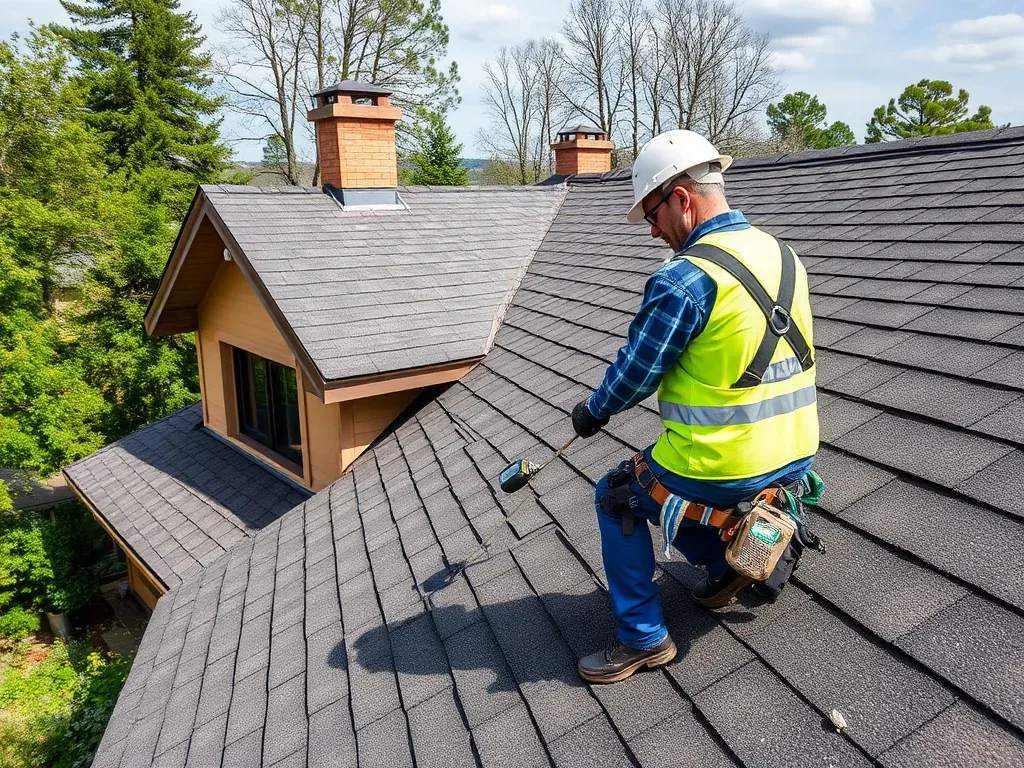
- Exterior walkthrough – We inspect the entire roofline using proper scaffolding and safety harness, examining shingles, ridge cap, valleys, drip edge, step flashing, counter-flashing, and all vent boots and pipe boots for gaps, splits, or sealant failure. We document the roof pitch, roof shape (hip, gable, mansard, gambrel), and any dormers, parapets, or chimneys.
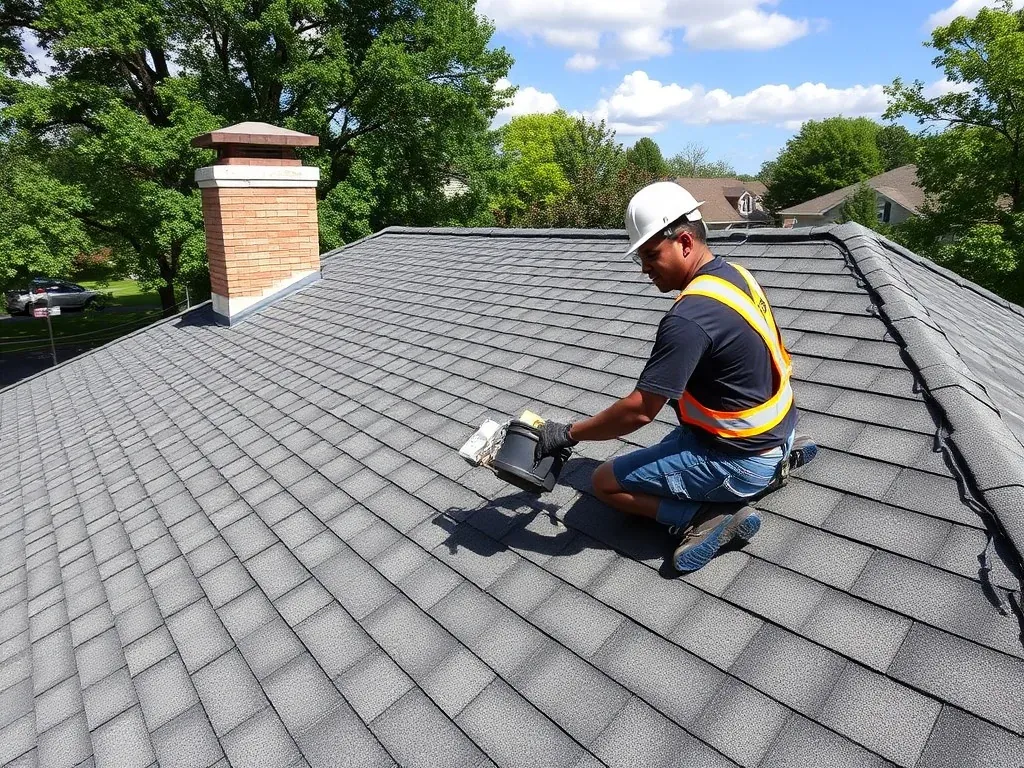
- Flashing assessment – Every flashing junction—step flashing where walls meet the roof, apron flashing at roof penetrations, pipe flashing around plumbing vents, boot flashing at roof vents, and counter-flashing at chimneys—is examined for corrosion, gaps, or loose caulk and mastic application.
- Attic inspection – We enter the attic to assess ventilation (ridge vents, soffit vents, attic fans), insulation depth, roof deck condition (for rot or decay), and signs of moisture or mold. We check for proper vapor barrier installation and whether ventilation matches NC building code requirements.
- Gutter & downspout review – We clean debris from gutters, inspect downspout pitch and drainage, and check fascia and soffit boards for rot or deterioration.
- Photographic documentation – Every concern—missing shingles, flashing gaps, moisture stains, structural issues—is photographed with location notes.
- Detailed report – You receive a written inspection report with photos, findings, cost estimates, and a recommended timeline. Storm damage reports are formatted for insurance adjuster review.
Materials & Systems We Inspect
Our inspection covers every roofing type and system. For asphalt roofing, we examine three-tab shingles, architectural shingles, and premium grades for granule loss, curling, splits, wind damage, or hail bruising. We assess wood roofing—cedar shakes and wood shingles—for splitting, rotting, or cupping. Slate and tile (clay tile, concrete tile) are checked for cracking, spalling, or displaced pieces.
Metal roofing—standing-seam panels, corrugated panels, and metal shingles—is inspected for rust, fastener corrosion, or seam separation. Flat roofs and commercial systems (built-up roofs with tar and pitch, modified bitumen, TPO membranes, EPDM, and PVC membrane roofing) are examined for blistering, delamination, pooling, or adhesive failure.
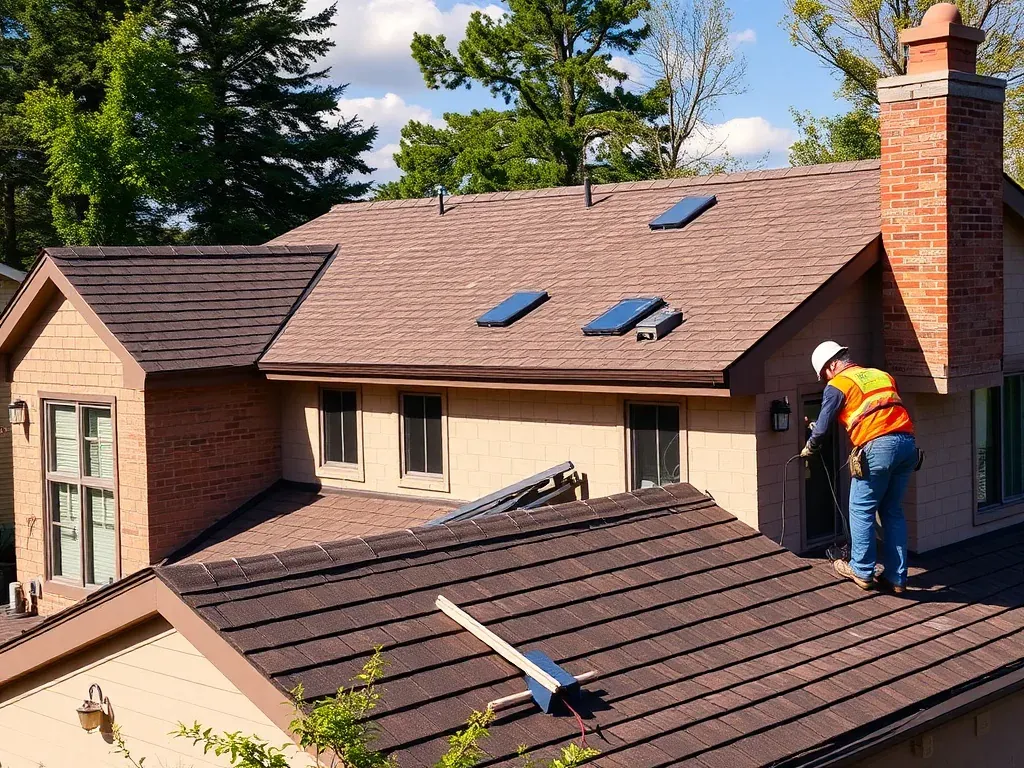
Underlayment and substrate—synthetic underlayment, tar paper, roofing felt, ice-and-water shield, and roof deck (plywood, OSB, or solid sheathing)—are assessed for rot, decay, moisture, or settling. Flashing systems, roof cement, and sealant integrity matter most. Ventilation components—ridge vents, soffit vents, vent boots, pipe boots, attic fans, and insulation—are verified for proper airflow per building code. Roof edge elements like drip edge, fascia, soffit, rake, verge, and eaves are checked for corrosion or deterioration. Penetrations (skylights, dormers, chimneys, parapets, scuppers, and coping) are assessed for flashing integrity. Roof anchors and snow guards ensure safety and proper attachment.
Inspection Tools & Methods
We use industry-standard assessment methods. Visual inspection with proper safety harness and ladder placement covers every accessible roof section. A moisture meter detects hidden water intrusion in underlayment and roof deck. Infrared thermal scanning reveals heat loss and moisture patterns. Drone imagery captures bird's-eye photos of roof planes and valleys for steep or complex geometries.
We evaluate fastener count and type using standard roofing assessments. Roofing square and measurement tools verify roof pitch and slope. We carefully use a pry bar and roofing shovel to lift shingles and inspect underlayment without damaging the roof. Every finding is photographed and documented with location and recommendation.
Costs & Timeline
A typical roof inspection in Charlotte runs $300–$600, depending on square footage, roof pitch, and complexity. Multi-story homes or roofs over 3,500 sq. ft. may cost more. Adding drone imagery or thermal scanning adds $100–$200 but provides comprehensive photo evidence—invaluable for insurance claims or before major repairs.
Most inspections conclude within 2–3 hours with same-day reporting. A free roof estimate for repair or replacement work is provided with your inspection.
Charlotte Climate & Roof Challenges
Hot, humid summers bring frequent afternoon thunderstorms and hail risk—hail causes granule loss and shingle bruising. Spring severe weather (tornadoes, damaging hail) can strip sections of roofing. Winter freeze-thaw cycles create ice dams where inadequate attic insulation and ventilation allow warmth to melt snow at the roof edge; water refreezes at cold eaves, backing up under shingles and water shield.
South-facing roof planes experience aggressive UV degradation. Coastal wind uplift (especially near open areas) accelerates shingle failure. Our inspection focuses on these failure modes—wind damage, hail impact, UV degradation, rot, decay, and ice dam susceptibility—that Charlotte roofs face year-round.
Insurance Claims & Roof Estimates
If a storm damages your roof, we document it thoroughly. Our inspection report and photographic evidence support your insurance claim. We provide a detailed roof estimate showing hail damage, wind uplift, water intrusion, flashing failure, or other storm-related issues. We help you file a proof of loss form and work with your insurance adjuster. Most homeowners policies cover roof damage from hail, wind, or other weather events.
FAQ: Your Roof Inspection Questions
Q: How often should I have my roof inspected?
A: Annual inspections catch problems early. After storms, always request an inspection to document damage for insurance.
Q: Is it safe to walk on my roof?
A: No. We use proper scaffolding, ladder placement, and safety harness. Unprofessional access can void warranties and cause injury.
Q: Will the inspection damage my roof?
A: No. We use non-invasive visual inspection. We only gently lift shingles where necessary to examine underlayment.
Q: What if you find problems?
A: We provide a detailed roof estimate, timeline, and warranty information. You decide what to repair, replace, or monitor.
Q: Do you handle insurance claims?
A: Yes. We document damage, provide detailed estimates, and communicate with your adjuster on your behalf.
Q: How long does the inspection take?
A: Most residential inspections take 1–2 hours. We'll give you a time estimate when you call.
What's Included
- Full exterior rooftop inspection with safety equipment and documented findings
- Attic assessment including ventilation, insulation, and roof deck condition
- Detailed written inspection report with photographic evidence
- Gutter and downspout evaluation
- Drone imagery for complex roof geometries (when needed)
- Free roof repair or replacement estimate based on findings
- Insurance claim documentation and support
- Same-day reporting with actionable next steps
Our Roof Inspection Process
- Exterior assessment – We walk your entire roof surface, inspecting shingles, ridge cap, valleys, flashing systems, vent penetrations, and roof edge elements using proper safety protocols.
- Attic inspection – We evaluate ventilation (ridge vents, soffit vents), insulation levels, roof deck condition, and any moisture or decay in the attic space.
- Gutter and drainage review – We clear gutters, inspect downspout pitch, and assess fascia and soffit condition for rot or deterioration.
- Moisture and thermal analysis – We use moisture meters and infrared scans to detect hidden water intrusion and thermal leaks invisible to the eye.
- Photographic documentation – Every concern is photographed and recorded with location notes for your records and insurance claim.
- Report delivery and estimate – You receive a comprehensive written report with findings, photos, repair cost estimates, and recommended timeline—all delivered same-day.
Signs You Need Roof Inspection
Warning Signs You Need a Roof Inspection in Charlotte
- Water stains on ceilings or upper walls indicate active leaks in your roof deck or underlayment
- Missing, cracked, or curled shingles expose the roof structure to water intrusion
- Granules accumulating in gutters signal asphalt shingle deterioration and end-of-life wear
- Sagging roofline suggests structural failure in trusses, rafters, or joists beneath the roof
- Daylight visible through attic roof boards means roof deck (plywood or OSB) has rotted or failed
- Moss, algae, or mold on roof surface indicates moisture problems and poor ventilation
- Ice dams forming at roof edges during winter suggest inadequate attic insulation and ventilation
Don't just take our word for it — hear from our satisfied customers.
"We were buying a home in Myers Park and the seller's inspector missed serious rot in the fascia and soffit. Charlotte Roof Master's detailed inspection report caught it before we closed. Saved us from a money pit." — James M., Myers Park
"After a hail storm, we weren't sure what damage we had. Their inspection documented everything perfectly—photos, measurements, cost estimates. Our insurance claim went through without any hassle." — Sarah K., Dilworth
"Our annual roof inspection caught early flashing failure around our chimney before water could cause damage inside. Their preventive approach saved us thousands." — David T., South End
Ready to get started? Call us today at 7044761263 for a free estimate.
Free estimates · Licensed & Insured · 25-year warranty
Call 7044761263